

Most of us associate perimenopause with hot flashes and irregular periods. But in a Hone Health survey of 660 women, respondents reported much stranger symptoms they hadn’t connected to fluctuating hormones — from itchy ears and hair texture changes to frozen shoulder and worse B.O.
These symptoms go well beyond the established hallmarks of perimenopause. In addition to hot flashes, that includes irregular periods, sleep and mood changes, brain fog, vaginal dryness, and shifts in body composition.
“Women come in every day with complaints that seem completely unrelated,” says Hone-affiliated OB-GYN Shelly Chvotzkin, M.D. “But we know there are estrogen receptors in almost every major organ and tissue type, so it makes sense that when estrogen dips, symptoms show up across the body.”
Below, Hone Health, a physician-led longevity platform, shares how women actually experience the transition — and you might, too.
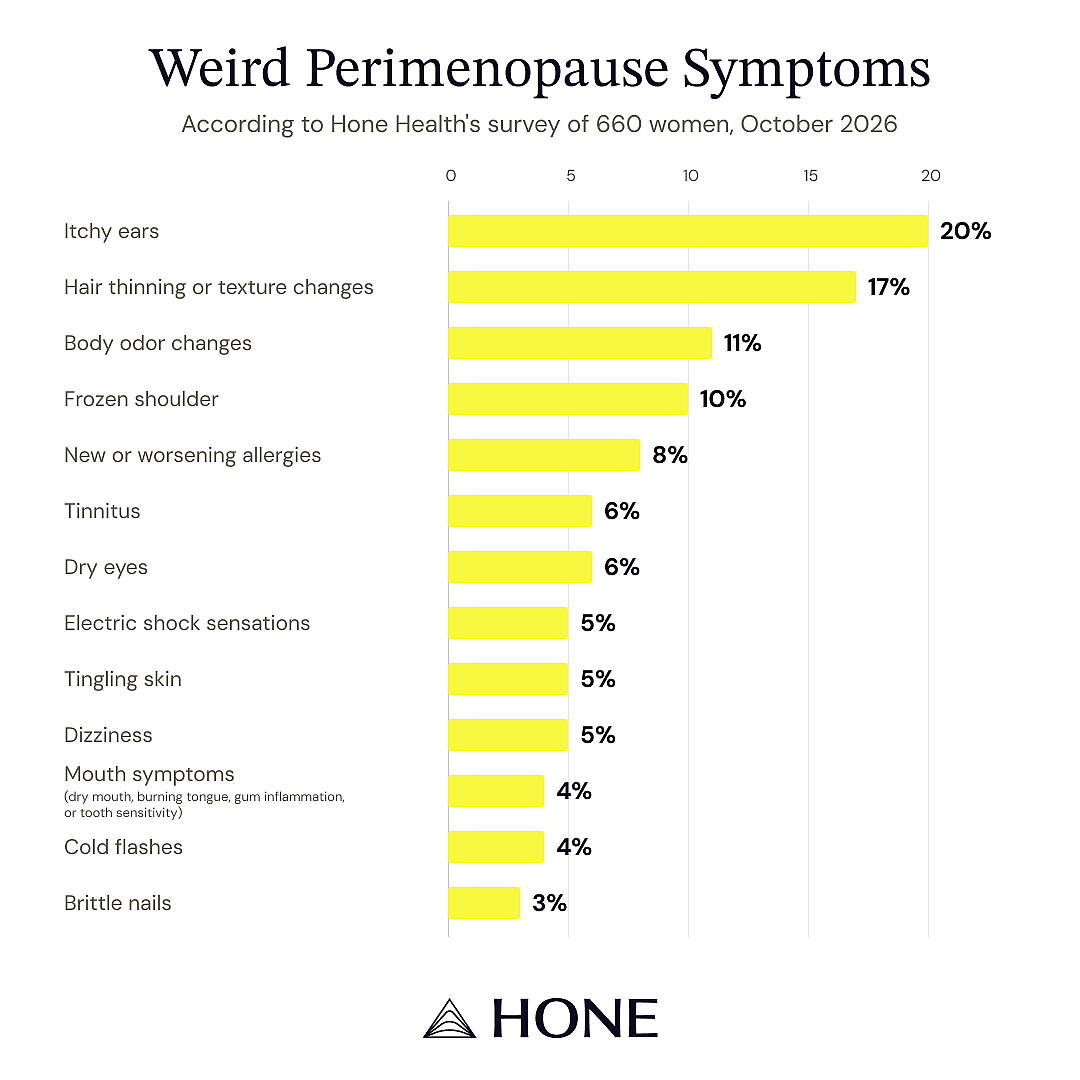
Itchy Ears: 20%
Nearly 1 in 5 respondents selected itchy ears as their strangest symptom.
Estrogen helps maintain skin’s collagen, moisture, thickness, and natural oils. As estrogen fluctuates and declines, skin can get drier, thinner, and more prone to irritation and itching. Oil production may also decrease, weakening the skin’s natural moisture barrier.
Eczema, allergies, infections, earwax buildup, and other skin or ear conditions can cause similar symptoms.
Hair Thinning or Texture Changes: 17%
Perimenopause can change both how much hair you have and how it behaves. Estrogen helps keep hair in its active growth phase. As levels become erratic and eventually decline, you may notice more shedding, a widening part, or a thinner ponytail. Hair may also become finer, drier, frizzier, or harder to style.
Thyroid disease, low iron, illness, stress, rapid weight loss, medications, and tightly pulled hairstyles can also cause midlife hair changes.
Body-Odor Changes: 11%
Armpits suddenly reek of onions? Fluctuating estrogen levels can get you sweating more and rev up the activity of your apocrine glands, a type of gland that produces thicker sweat, particularly in your underarms. When that moisture mingles with bacteria on your skin, it can produce a more pungent — or just different — B.O. than you’re used to.
Frozen Shoulder: 10%
Frozen shoulder, or adhesive capsulitis, develops when tissue surrounding the shoulder joint thickens and tightens, causing pain and restricted movement. A 2025 review proposed that declining estrogen may contribute to inflammation and fibrosis, the buildup of stiff connective tissue that limits motion.
Diabetes, thyroid disorders, shoulder injuries, surgery, and prolonged immobility are also established risk factors.
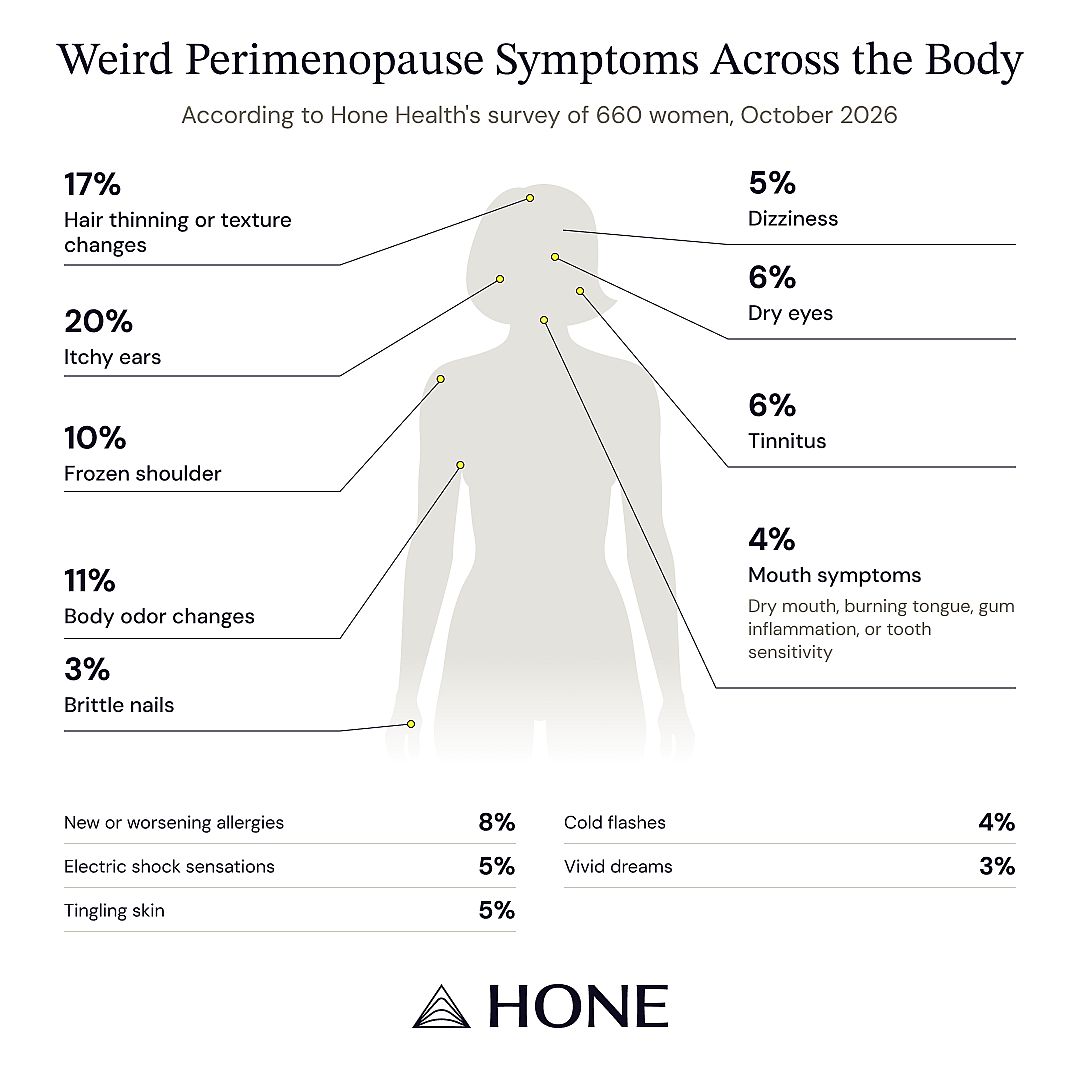
Survey respondents also reported weird changes involving everything from their eyes, ears, and mouth to their nerves, their immune system, and even their dreams.
Among the fill-in options, respondents also named these surprising perimenopause symptoms: new facial hair, increased gas, heart palpitations, panic attacks, snoring, sore or swollen breasts, varicose veins, urinary urgency or leakage, chronic UTIs, vaginal itching, dry, itchy skin, food aversions, indigestion and other digestive changes, more frequent migraines, and body aches.
In October 2026, the American College of Obstetricians and Gynecologists issued new guidance strongly recommending systemic menopausal hormone therapy — also called hormone replacement therapy (HRT) — as a first line of treatment for hot flashes, night sweats, and related sleep problems in women without contraindications.
Systemic HRT replaces some of the estrogen your ovaries are no longer producing consistently. Women who still have a uterus also need progesterone or a progestogen to protect its lining. Vaginal estrogen can target vaginal dryness, painful sex, and some urinary symptoms.
HRT hasn’t been shown to treat every unusual symptom in this article, but treating the underlying hormonal disruption — and improving sleep, temperature regulation, and dryness — may go a long way toward easing other symptoms.
Talk to your physician about all your symptoms, your medical history, and whether hormone replacement therapy is appropriate for you. New, severe, or rapidly worsening symptoms still deserve a closer look rather than an automatic “it’s just perimenopause.”
Hone Health surveyed 660 female members about their experiences with perimenopause symptoms and treatment in October 2026. Responses relied on self-reported recall. The results describe this group and may not represent all U.S. women or establish that perimenopause caused every reported symptom.
This story was produced by Hone Health and reviewed and distributed by Stacker.


